

Marshall Bwanya
HARARE—Controversial businessman Wicknell Chivayo is under scrutiny after a leaked Kenyan government document suggested he was issued a Kenyan passport under circumstances critics say may have bypassed legal procedures.
The document, shared widely on social media by Kenyan activist Boniface Mwangi, names Chivayo among several foreign nationals whose connections to Kenya are unclear.
His name appears on a record of new passport applications dated July 2025.
The Kenyan passport is a sovereign document reflecting national identity and rights.
Kenyan law requires proof of citizenship, typically a national identity card and documented residence, before a passport can be issued.
If the allegations are accurate, they raise questions about administrative integrity and executive influence in immigration services, at a time when Kenya is preparing for a general election in 2027.
Mwangi, a well-known Kenyan photojournalist and human rights advocate, posted the leaked document earlier this week, raising questions about its authenticity and the process by which the passports were granted.
He became prominent for his coverage of post-election violence in Kenya in 2007–08 and has been an outspoken critic of political corruption and impunity for nearly two decades.
His activism has at times brought him into conflict with authorities, including past arrests on contested charges related to protests, although such charges have been dropped or reduced.
The document naming Chivayo and others has stoked debate not only about immigration procedures but also about the possible political implications of granting Kenyan passports to influential figures from outside the country.
Among other names on the list are individuals bearing Sudanese surnames, some of whom share names with people linked to armed groups involved in the conflict in Sudan, prompting concerns among opposition politicians and civil society activists.
Chivayo, who has a reputation as a successful philanthropist, has a past fraud conviction and a history of controversial state contracts.
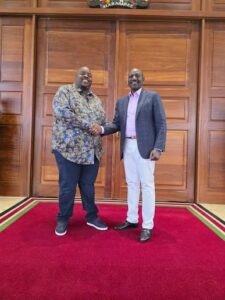
He has been photographed multiple times with Kenyan leader William Ruto and other African leaders, including at State House in Nairobi and with presidents in regional capitals.
In April 2024, Chivayo was photographed with President Emmerson Mnangagwa and Ruto, a day before the latter officially opened the Zimbabwe International Trade Fair (ZITF) in Bulawayo.
He was also photographed with Tanzania’s President Samia Suluhu Hassan at a State House event in Nairobi.
These appearances have attracted attention because they are atypical for a private businessman without a defined diplomatic or corporate role in those countries, prompting questions about the nature of his relationships with senior officials.
Kenyan opposition politicians have raised concerns that passport issuance to high-profile non-citizens could deepen public distrust in state institutions, particularly the Directorate of Immigration Services, at a moment when executive authority and administrative accountability are under sharp scrutiny.
Former Chief Justice and politician David Maraga has publicly criticised similar passport controversies linked to other foreign nationals, framing them as constitutional and national security concerns.
Kenyan government spokespeople have not yet provided a full public explanation of the leaked list or responded in detail to queries about the procedures followed.
Failed verification of citizenship and passport issuance procedures could prompt formal investigations by oversight bodies if due process is found not to have been followed, according to immigration law analysts.
The controversy comes as civil rights groups and opposition figures are already critical of what they characterise as impunity and administrative laxity in Kenya’s political system.