

Valentine Maponga
Harare—Sunny Jin Long Energy, a Chinese-controlled investment, is developing a coal-fired power project that is advancing into the Chivero-Manyame wetlands that lie just under 30km west of Harare.
This has triggered a high-stakes legal and environmental battle over wetlands regulation, climate accountability and the protection of Harare’s and Norton’s main water source, Lake Chivero.
BirdLife Zimbabwe, the Zimbabwe Wetlands Trust and the Combined Harare Residents Association have filed a joint appeal seeking to block the construction of a 210-megawatt coal-fired thermal power plant being developed by Sunny Jin Long at Knockmallock Estate, which is within the Chivero–Manyame wetlands.
The appeal was lodged on 20 November 2025 and calls for the revocation of an Environmental Impact Assessment (EIA) certificate issued to the company by the Environmental Management Agency (EMA) on 14 May 2025.
The project is located within a Ramsar-listed wetland stretch and a designated Key Biodiversity Area.
The appellants argue that authorising a coal-fired power station in such a sensitive ecosystem violates national environmental law and contradicts Zimbabwe’s international climate and conservation commitments.
In December 2024, the ministry of Lands authorised a solar photovoltaic facility and a fertiliser manufacturing plant at the same site.
By May 2025, however, EMA had issued a licence permitting coal-based power generation in the same area, reflecting a serious regulatory disconnect between the ministry and the agency.
The electricity produced is purportedly intended to primarily supply the adjacent Sunny Yi Feng tile manufacturing plant, but some official documentation inconsistently identifies a fertiliser plant as the main beneficiary.
While Sunny Jin Long is the proponent of the thermal plant, the underlying land permit was originally issued to a company called Broxmen Investment (Private) Limited, raising questions about land tenure and regulatory compliance.
Despite the legal challenge, construction has advanced rapidly.
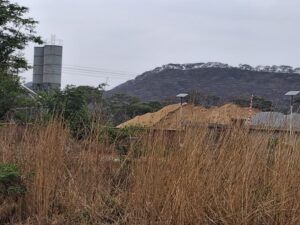
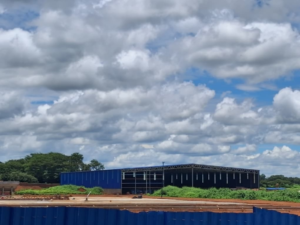
By early November last year, it emerged, Sunny Jin Long had already put up the main chimney stack, indicating substantial progress in core infrastructure.
Several ancillary structures are under construction, a concrete mixing plant is operational and sections of the perimeter wall have been completed.
By late January 2026, warehouses and additional associated infrastructure had been established, visibly entrenching the project on the wetland estate.
Environmental groups say the EMA-approved EIA relied on outdated baseline data and failed to account for escalating ecological stress within the Chivero–Manyame system.
Researchers at the University of Zimbabwe reported severe toxic algal blooms in Lake Chivero in late 2025, with concentrations of microcystis aeruginosa described as “too numerous to count”.
The blooms coincided with wildlife deaths involving grey herons, white-faced ducks, zebras and a giraffe.
Experts warn that the thermal plant will intensify existing water insecurity.
The Manyame water system is reported to be overwhelmed by demand, producing about 436 megalitres per day against an estimated 704 megalitres to meet Harare’s demand alone.
A coal-fired plant, with heavy water requirements and pollution risks, is expected to place further strain an already fragile system.
Project specifications indicate the plant is designed to consume approximately 5,800 tonnes of coal per day, transported from Hwange by diesel-powered rail and road.
Climate analysts say this would significantly increase Zimbabwe’s greenhouse gas emissions, undermining commitments under the Paris Agreement and the United Nations Framework Convention on Climate Change.
Residents in nearby Galloway and Mashuma Park communities say they were not adequately consulted and were denied access to information about potential health and environmental impacts.
The appeal alleges procedural violations under the Administrative Justice Act and the constitution, which guarantees the right to a healthy environment and safe, clean drinking water.
“This project lacks a social licence to operate. It violates our constitutional right to a healthy environment and safe drinking water,” one appellant who spoke separately and off record said.
The coalition has petitioned the minister of Environment, Climate and Wildlife to set aside the EIA certificate, arguing that licence conditions are vague, unenforceable and fail to provide credible pollution control measures or emergency response plans.
They further argue that authorising a coal-fired plant in a protected wetland undermines Zimbabwe’s credibility at a time when the country holds the presidency of the Ramsar Convention on Wetlands (COP15).